Pick up your phone.
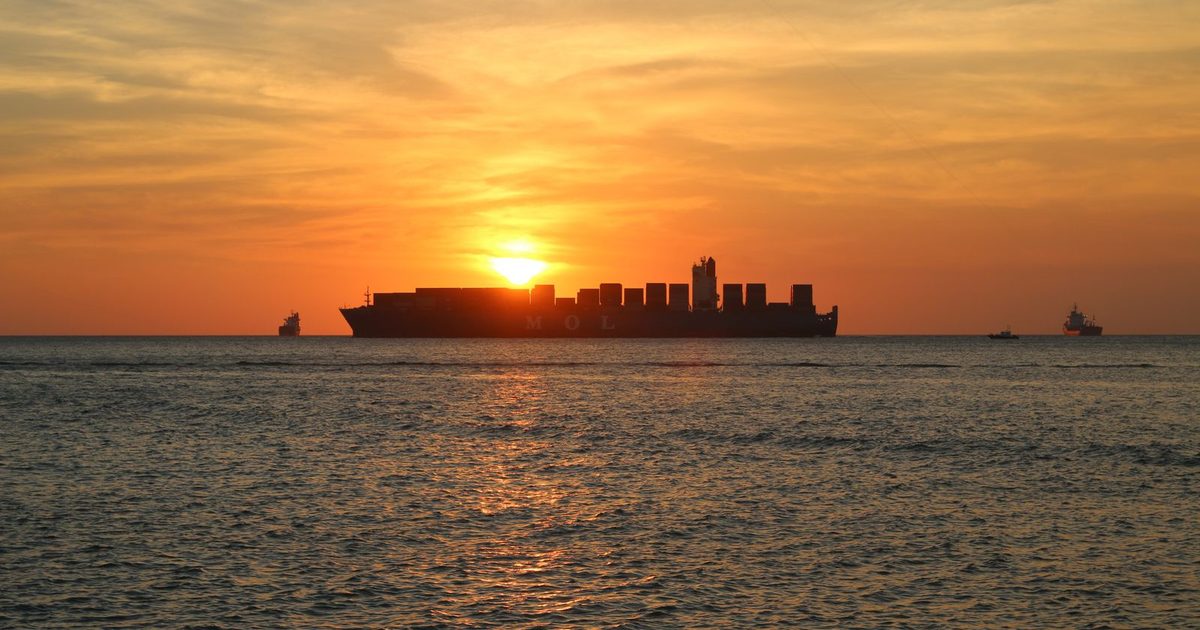
Parts of it were made in different countries. The metal came from one place, the glass from another, the tiny chips from a third. Someone put them together, someone packed them into a box, and someone moved that box across an ocean, through a port, onto a truck and into a shop. You paid for the phone. You never met the people who got it to you.
Freight forwarding is the work of those people. It moves food, medicine, machines and phones, in good years and bad. Very few industries are this important and this little understood, and almost nobody notices it when it goes well.
What a freight forwarder actually does
A freight forwarder is a planner and a go-between. Most forwarders do not own the ship, the plane or the truck. They find the right ones, book the space, prepare the papers, pay the fees along the way, deal with customs (the government office that checks and taxes goods coming into a country), and watch over the goods until they arrive.
Think of the conductor of an orchestra. The conductor plays no instrument, but without the conductor the orchestra cannot play together. A shipment has a shipper, a shipping line, a port, a customs office, several government agencies, a bank, a trucker and a buyer. The forwarder is the one keeping them in time.
How I got here
I did not start in freight. I studied physics, then worked in procurement, telecoms projects and marketing. I came into freight forwarding as a digital marketer, and I had to learn the trade properly before I could sell it.
I have now spent ten years in it in Nigeria, in a real 9 to 5, moving across almost every seat in the business: marketing, sales, overseas partners, tenders, the office of the chief executive and business performance. I stayed because of what the work keeps teaching me.
Five lessons no brochure mentions
1. Nothing is local
Every ordinary thing in your life has travelled. Once you see that, you notice how many people, in how many countries, had to do their small part correctly for one container to arrive. It makes you humble. It also makes you grateful.
2. Paper moves before cargo
A container does not move because it is ready. It moves when the papers are right: who owns it, what it is, what it is worth, and what permission it needs. One wrong number or one wrong word on one document can hold a whole shipment at the port, and every day it waits costs money. Freight taught me that details are not small things. They are the work.
3. Time is a meter that is always running
Every port gives a few free days to collect your goods. When those days end, a daily charge called demurrage begins, whether or not anyone is working on the problem. I learned to ask about time before I ask about price, because the cheapest option often becomes the most expensive one when it is late.
4. You are often a bank
The port, the shipping line and customs usually want to be paid before your client pays you. So a freight company spends other people's money first and waits to be repaid. That taught me the difference between being busy and being profitable, and why a business can have its best year ever and still struggle to pay salaries. I wrote about this in Your freight company is a bank, and nobody told you.
5. Trust is infrastructure
You will work with partners in countries you may never visit, in other time zones, on an email and a promise. Everything depends on whether they do what they said. Reputation is the road the work travels on.
What it taught me about work and life
It taught me patience, because some delays have no villain. It taught me to write things down, and to say clearly who owns what. It taught me to raise a problem early, while it is still small.
And it taught me that something goes wrong somewhere on every long journey. The professional is not the person whose shipments never have problems. It is the person who stays calm when they do, and fixes them.
The problem with the trade in Nigeria
Here in Nigeria, the trade has a problem. Freight forwarding is one of the oldest trades there is, yet the formal sector has been slow to embrace it as a profession. Many people still treat it as something you fall into, not something you train for.
So formally trained people, with real experience and deep knowledge, are in short supply. The industry pays for that gap every day: in shipments stuck at the port, in charges nobody planned for, and in businesses that grow busier and poorer at the same time.
Why it is a career worth choosing
And yet it is one of the best career paths I know. In a single week you deal with trade, money, law, technology and people. You learn how the world economy really works, one container at a time. And because goods have to move in good years and bad, the work does not disappear when times are hard.
For anyone who likes solving real problems, it is a quiet trade with a lot of room at the top.
What you will find on this site
This is where I share what the trade has taught me, in plain English:
- what a 9 to 5 in freight is really like, and my crooked career path;
- the mistakes I see forwarders make, and how to fix them;
- how importers and exporters can understand the industry and get the best from it;
- free tools that do the sums for you, from customs duty to demurrage;
- and the systems I am building to help freight businesses run on software instead of paper, so the work is faster, cheaper and easier to control.
When more people understand how goods really move, fewer of them lose money to what they did not know. That is the whole point.
If you work in freight, or in any trade that quietly holds other people's lives together: what has it taught you that school never did? Write to me. I read everything.